
Vibration Isolation Systems
Overview of the Vibration Isolation Systems
Introduction to the Vibration Isolation Systems:
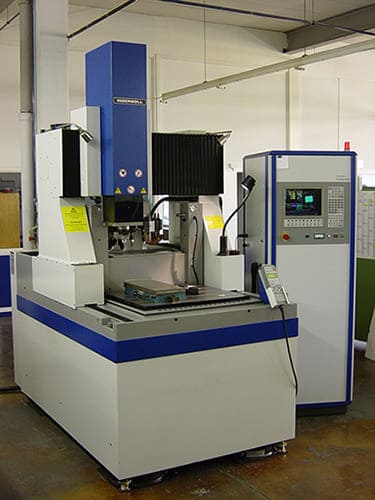
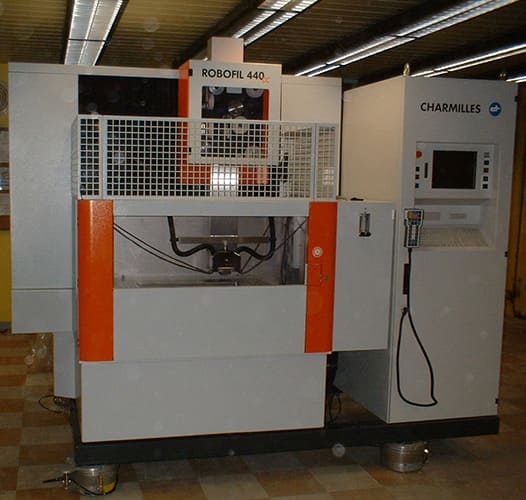
During operation, high-speed or high-power machinery often generates vibration. A vibration isolation system helps control vibration, improve stability and accuracy, and reduce noise during operation.
Therefore, Bilz Vibration Technology AG – a world-leading company in vibration isolation – provides solutions that reduce vibration, minimize vibration amplitudes, and ensure stable machine operation.
Key Features of the Vibration Isolation Systems:
- A wide range of applications, suitable for various types of machinery and equipment
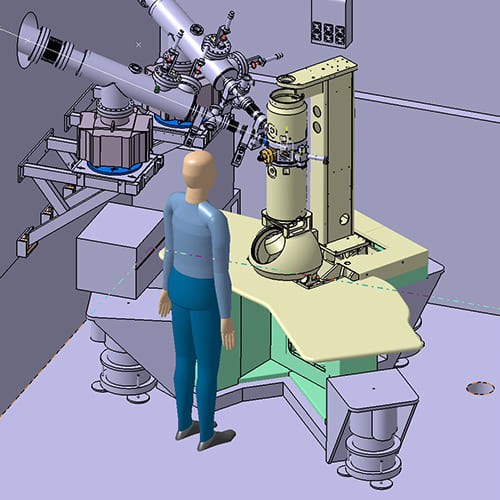
- Particularly suitable for measuring instruments and high-precision machinery
- Professional solutions for complex vibration challenges, meeting the stringent requirements of high-precision industries
Components of the Vibration Isolation Systems
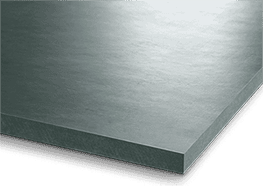
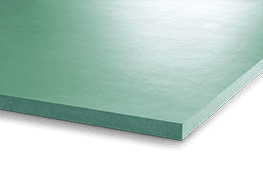
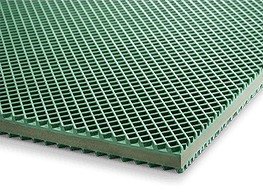
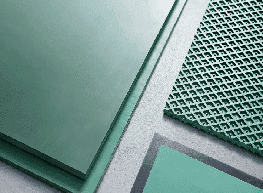
Vibration isolation pads are designed to reduce vibration and noise transmitted through structures across a wide range of industrial applications. They are manufactured from nitrile rubber, cork granules, and cross-linked polyester fibers, providing excellent durability and superior mechanical properties.
Features of Vibration Isolation Pads
- Excellent resistance to modern coolants and lubricants, allowing the isolation pads to be used even in oily environments without compromising the material’s properties.
- Excellent resistance to permanent deformation under long-term loads (compression set), ensuring reliable performance over extended periods.
- With 8 different pad types, Bilz offers suitable solutions for most vibration isolation requirements, covering a wide range of machinery such as lathes, milling machines, grinding machines, and more.
Types of Vibration Isolation Pads used in Bilz Vibration Isolation Systems:
Vibration Isolation Pad B6
B6 Vibration Isolation Pads are designed for extremely high load capacities, ensuring optimal stability. They are ideal for very heavy-duty machines and long machine beds.
Technical Specifications:
- Load Capacity: 50–350 N/cm²
- Thickness: 15 mm
- Coefficient of Friction: 0.6
Vibration Isolation Pad B0
B0 Vibration Isolation Pads offer high uniformity and are specifically designed for machines with low structural rigidity, such as machining centers, lathes, grinding machines, and more.
Technical Specifications:
- Load Capacity: 50–200 N/cm²
- Thickness: 15 mm
- Coefficient of Friction: 0.6
Vibration Isolation Pad B4
B4 Vibration Isolation Pads are versatile and suitable for machine tools, plastic processing machines, and printing machines. They are particularly well suited for machines that tend to shift or move during operation
Technical Specifications:
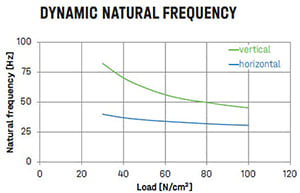
- Load Capacity: 30–100 N/cm²
- Thickness: 15 mm
- Coefficient of Friction: 0.8
Vibration Isolation Pad B50
B50 Vibration Isolation Pads are designed for machines with high dynamic forces and small contact areas, such as presses, stamping machines, cutting machines, and more.
Technical Specifications:
- Load Capacity: 30–200 N/cm²
- Thickness: 25 mm
- Coefficient of Friction: 0.8
Vibration Isolation Pad B5
B5 Ribbed Vibration Isolation Pads feature a ribbed design that helps compensate for uneven surfaces and floor irregularities. They are specifically designed for machines with small contact areas and high dynamic forces, such as presses, stamping machines, cutting machines, and more.
Technical Specifications:
- Load Capacity: 50–160 N/cm²
- Thickness: 25 mm
- Coefficient of Friction: 0.8
Vibration Isolation Pad B32
B32 Vibration Isolation Pads are soft and feature a flat surface, providing high vibration isolation performance. They are specifically designed for machines with low dynamic forces, such as presses, medium-sized stamping machines, and similar equipment.
Technical Specifications:
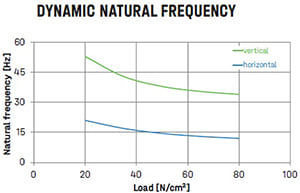
- Load Capacity: 20–80 N/cm²
- Thickness: 25 mm
- Coefficient of Friction: 0.8
Vibration Isolation Pad B32W
B32W Vibration Isolation Pads are very soft and feature a ribbed surface, providing excellent vibration isolation performance. They are suitable for machines with low dynamic forces.
Technical Specifications:
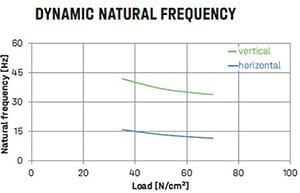
- Load Capacity: 35–70 N/cm²
- Thickness: 25 mm
- Coefficient of Friction: 0.8
Vibration Isolation Pad B30
B30 Vibration Isolation Pads are very soft and feature a ribbed surface, providing superior vibration isolation performance. They are suitable for machines with low dynamic forces.
Technical Specifications:
- Load Capacity: 20–80 N/cm²
- Thickness: 18 mm
- Coefficient of Friction: 0.8
Vibration Isolation Pad B30W
B30W Vibration Isolation Pads are very soft and ribbed, designed for static applications. They provide optimal vibration isolation by effectively absorbing low-frequency vibrations. They are suitable for measuring machines, testing equipment, balances, and microscopes.
Technical Specifications:
- Load Capacity: 5–40 N/cm²
- Thickness: 18 mm
- Coefficient of Friction: 0.8
Vibration Isolation Pad B13W
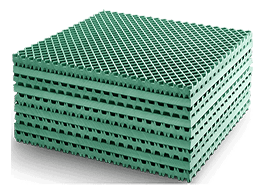
B13W Ribbed Vibration Isolation Pads provide the highest level of vibration isolation performance. They can be stacked up to 6 layers, reducing the natural frequency to approximately 25 Hz (or approximately 8 Hz when used with vibration isolation buffers). They are particularly suitable for foundation vibration isolation.
Technical Specifications:
- Load Capacity: 5–40 N/cm²
- Thickness: 13 mm
- Coefficient of Friction: 0.8
Anti-Slip Pads
Bilz Anti-Slip Plates and Leveling Pads are designed for mechanical leveling and slip prevention and are not intended for vibration isolation.
They include the following types: BS1, BS, BN, BR7, and B8.
Pad Sets
- Stack 2–6 Bilz isolation pads to create a pad assembly.
- Suitable for large machines and spring-mounted foundations.
Four Possible Options For The Use Of Insulation Pads for Machine Installation

Application 1
Free-standing machine foundations using Bilz insulation pads compensate for uneven floors and provide effective vibration isolation. The number, size, and arrangement of pads depend on the machine weight and available support surface.
Application 2
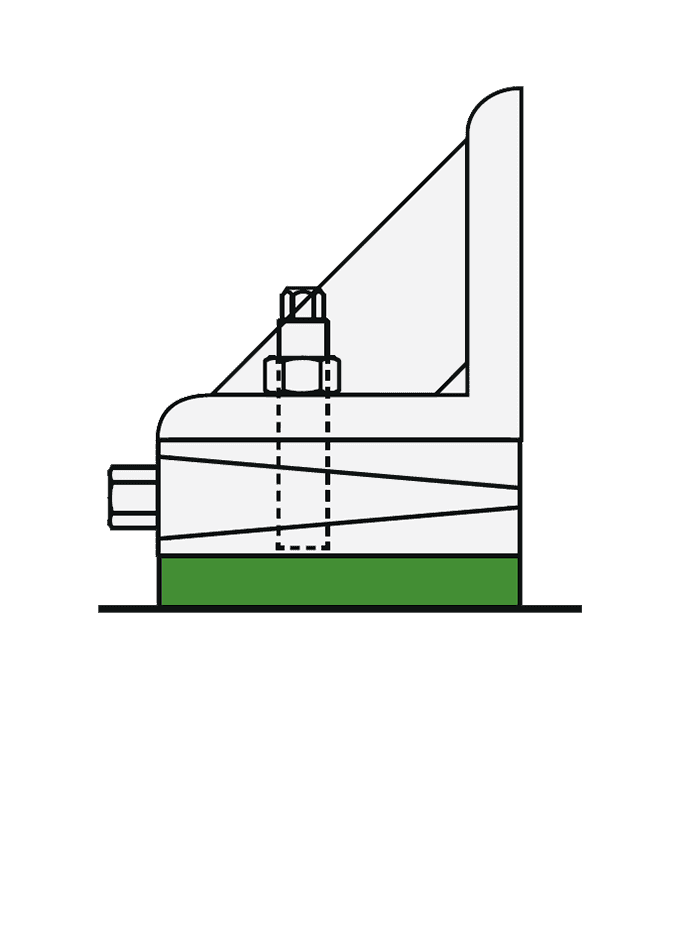
Stable connection to the machine bed using bolt-on installation fittings that remain in place when the machine is lifted. Specifically for machines with high dynamic forces (injection moulding machines, stamping equipment, etc.).
Application 3
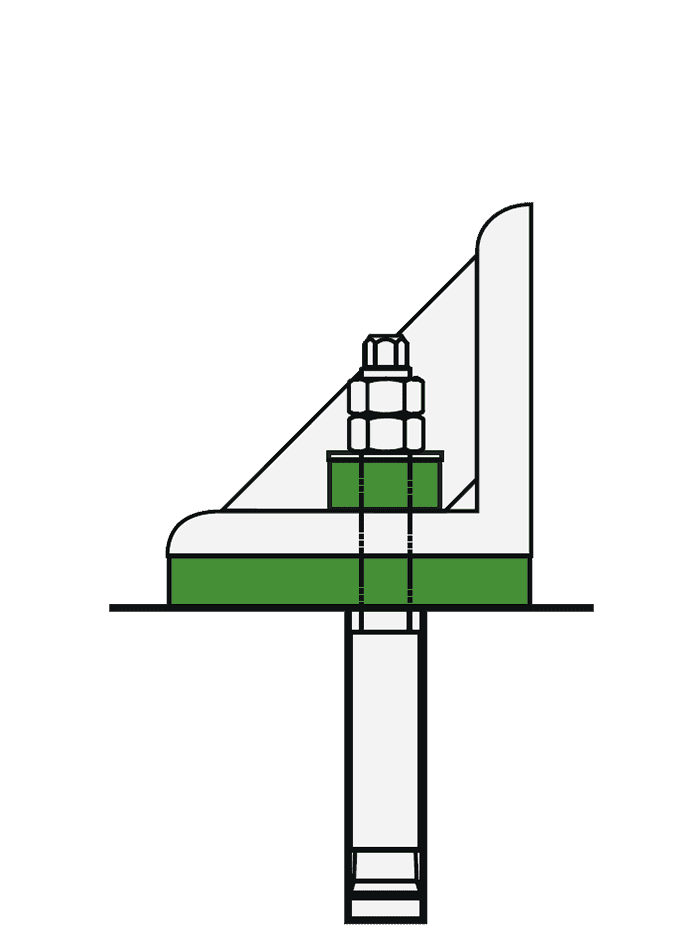
Bolt-through ground anchoring using insulation pads and insulation washers. The use of insulation washers prevents vibrations being transmitted through the bolt.

Application 4
Highly effective shock and vibration insulation by Bilz insulation pad sets. Different Bilz pads are combined into pad sets offering significantly improved insulation.
A cost-effective solution combining precise levelling adjustment with effective isolation of disruptive vibrations for machinery.
Features of Levelling Elements
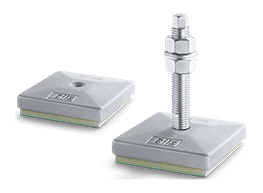
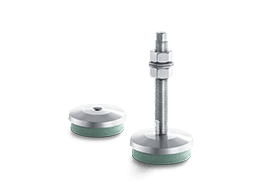
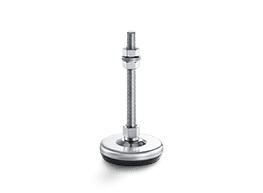
- Bilz levelling elements are used for vibration and structure-borne noise insulated machine installation.
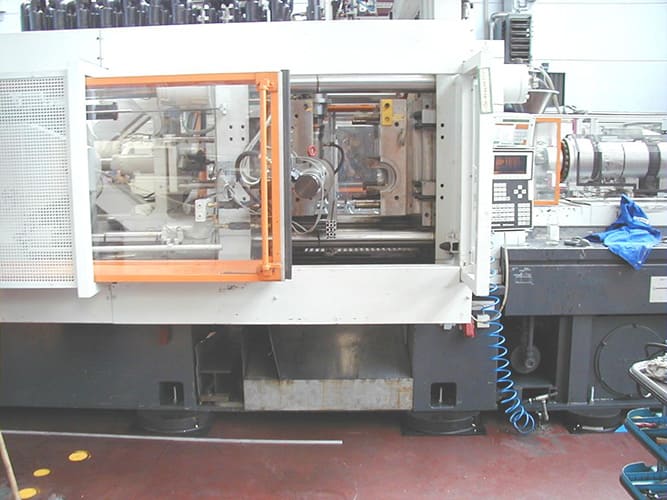
- The maintenance-free machine feet ensure simple and precise levelling of machines and are available in many versions.
- The appropriate size and insulation pads are selected according to the application and load. The levelling range can be adjusted depending on the selected bolt length and according to individual requirements (except for BNSH / BNSHA).
Types of Levelling Elements in Bilz Vibration Isolation Systems:
Series BNSH/BNSHA
Key Features:
- Specially developed levelling element for the bearing of injection moulding machines, presses, punches, etc.
- Optimum load distribution due to the proven pressure pad design.
- Very high horizontal stability over the entire levelling range.
- The BNSHA levelling element with bolt-on floor mounting is particularly suitable for all machines that tend to ‘wander’.
- The floor mounting is not designed as a safeguard against tipping.
Series BNV/BNVS
Key Features:
- Proven and highly effective pad elements, preferably for light to medium-heavy machines with corresponding locating holes or threads in the machine base.
- The BNVS element is used wherever a rigid connection between element and machine is required.
- The movable levelling bolt can compensate for any unevenness of the floor or angular differences of up to ± 3°.
Series BNR/BNRS
Key Features:
- Proven and highly effective pad elements, preferably for light to medium-heavy machines with corresponding locating holes or threads in the machine base.
- The BNRS element is used wherever a rigid connection between element and machine is required.
- The movable levelling bolt can compensate for any unevenness of the floor or angular differences of up to ± 3°.
Series BNRV/BNRSV
Key Features:
- For machines with corresponding locating holes or threads in the machine feet used in the food, luxury food, packaging, chemical and pharmaceutical industries, as well as for clean room applications.
- BNRSV elements are used wherever a rigid connection between element and machine is required.
- The movable levelling bolt can compensate for any unevenness of the floor or angular differences of up to ± 3°.
Series BFE
Key Features:
- Cost-effective stainless steel design for machines with corresponding locating holes or threads in the machine feet in the food, packaging, chemical and pharmaceutical industries.
- The movable levelling bolt can compensate for any unevenness of the floor or angular differences of up to ± 7.5°.
- BFE levelling elements cannot be used in combination with Bilz insulation pads.
Series GMA
Key Features:
- Stationary and mobile use of machines, equipment and aggregates, e.g. engines, machine tools, woodworking machines, screens, rolling mills, pumps, compressors, air conditioning and ventilation systems.
- Natural frequency approx. 25 Hz
- These elements are supplied without bolts.
Series BNL
Key Features:
- Sufficient insulation from vibrations and structure-borne sound.
- Precise levelling pressure pad for optimum weight distribution.
- The rubber element is resistant to commercial acids, alkalis and lubricating oils.
- Matching levelling bolts, each with a nut and washer, are included.
- Cannot be used in combination with Bilz insulation pads.
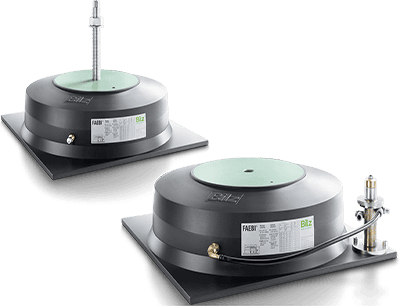
FAEBI® is a Bilz air spring vibration isolator that reduces machinery and equipment vibration and structure-borne noise.
Additionally, the system automatically adjusts air pressure according to the load to maintain a stable height and consistent isolation performance.
Moreover, its elastomeric rubber air spring and anti-slip base make FAEBI® suitable for a wide range of industrial applications.
Features of Rubber air spring insulators Faebi®
FAEBI® is a Bilz air spring vibration isolator that reduces machinery and equipment vibration and structure-borne noise.
Additionally, the system automatically adjusts air pressure according to the load, maintaining a stable height and consistent vibration isolation.
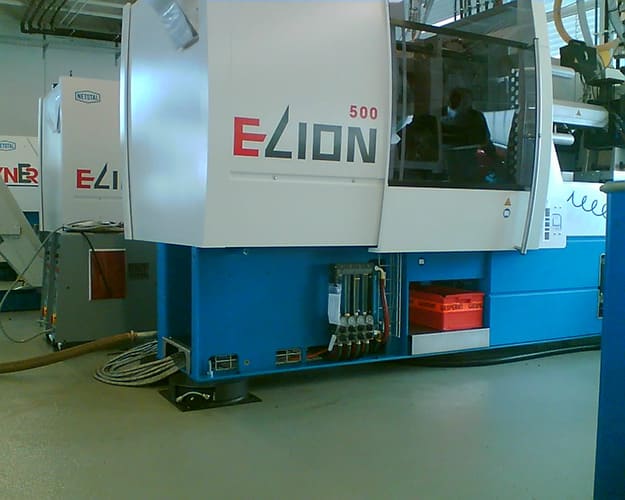
Moreover, its elastomeric rubber air spring and anti-slip base make FAEBI® suitable for a wide range of industrial applications.
Types of Rubber Air Spring Faebi used in Bilz Vibration Isolation Systems:
Series FAEBI®
Key Features:
Compared to steel springs, the use of air springs offers numerous advantages in vibration insulation:
Flexible isolation system design: When static or dynamic loads change, users can adjust the deflection by changing the air pressure. They can make these adjustments manually or automatically using Bilz level control.
Integrated damping: The system provides built-in damping, so users do not need separate damping components.
Effective structure-borne noise isolation: The system prevents structure-borne noise from transmitting through the support system.
Wide temperature range: The system operates reliably from -20°C to +60°C.
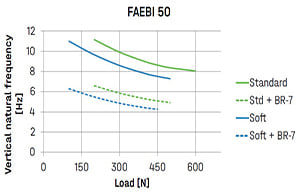
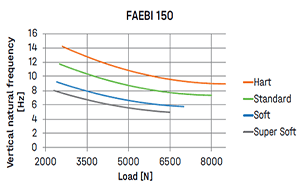
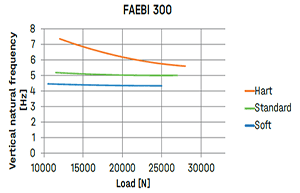
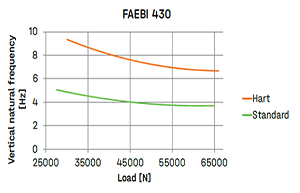
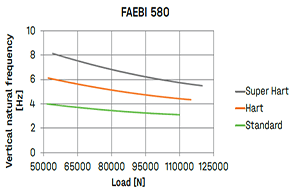
Natural Frequencies Faebi 50 ~ 580
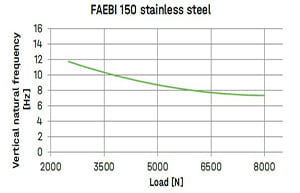
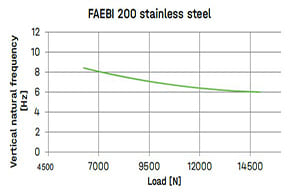
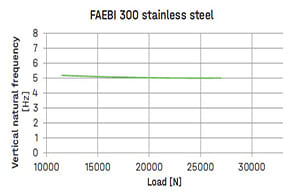
Series FAEBI® - Stainless Steel
Key Features:
Compared with steel springs, air springs offer several advantages for vibration isolation:
Flexible isolation system design: When static or dynamic loads change, users can adjust the deflection by changing the air pressure. They can make these adjustments manually or automatically using Bilz level control.
Outdoor applications: Users can install air springs outdoors when they add a stainless steel protective hood.
Integrated damping: Air springs provide built-in damping, eliminating the need for separate damping components.
Effective structure-borne noise isolation: Air springs prevent structure-borne noise from transmitting through the support system.
Wide temperature range: Air springs operate within a temperature range of -20°C to +60°C.
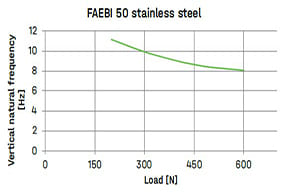
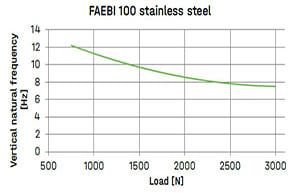
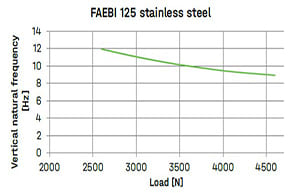
Natural Frequencies Faebi 50 ~ 300
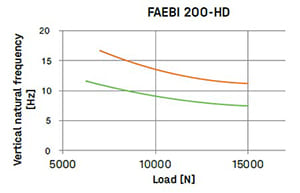
Series FAEBI® - HD (with adjustable damping)
Key Features:
- Wear-resistant, low-maintenance air damping, easy to adjust from the outside using the throttle valve.
- Rapid machine movement reduction due to increased energy absorption.
- Deflection characteristics can be adapted by adjusting the air pressure.
- No transmission of structure-borne noise.
- Permissible temperature range: -20 °C to +60 °C.
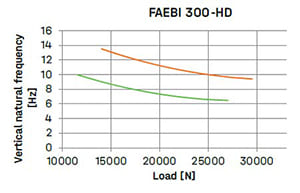
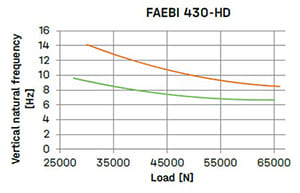
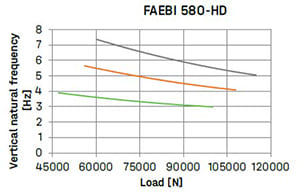
Natural Frequencies Faebi 200-HD ~ 580-HD
Applications of Rubber Air Springs
These systems are ideal for source isolation of high-speed presses, forging hammers, and other machines with highly dynamic disturbance forces.
Additionally, they provide passive isolation for measuring and testing equipment, as well as high-precision machine tools.
These systems provide highly effective vibration isolation for measuring, testing, inspection, and production machines in the semiconductor industry.
They also suit optical and electronic devices, laser systems, precision machining equipment, and vehicle, engine, and gearbox test benches.
How the membrane air spring work
To achieve maximum damping, the design divides the air space into two chambers: load and damping volumes.
These chambers connect through a bypass, which allows controlled airflow between the two volumes.
Furthermore, users can adjust an external throttle valve to set the desired airflow cross-section and damping level.
As a result, the system can achieve a damping level of up to 15%.
Genenral information on the selection and application
Maximum horizontal movement: Depending on the air spring size, the maximum permissible horizontal amplitude ranges from approximately 1 to 2 mm.
Extended stroke options: In addition to the standard solutions listed here, we offer numerous air springs with longer strokes and lower natural frequencies.
Air spring selection: Please select the air spring size based on the load at an air pressure of 4 bar.
Color options: The powder-coated air springs are also available in other RAL colors on request.
Wide temperature range: The permissible operating temperature ranges from -20°C to +80°C.
Overpressure protection: Additional safety valves or mechanical piston stroke limits virtually eliminate the risk of rolling membrane damage from overpressure.
Types of BiAir Air Springs used in Bilz Vibration Isolation Systems:
Series BIAIR-ED-AL - (Anodised Aluminium)
Key Features
This low-frequency membrane air spring operates vertically from 2.5 Hz and offers precisely adjustable damping for effective vibration isolation.
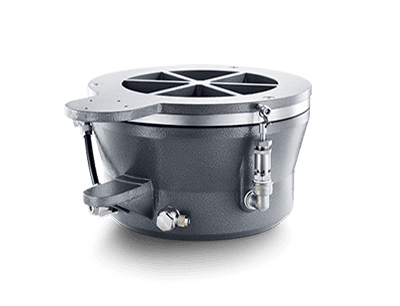
Furthermore, its anodised aluminium construction meets demanding requirements for material properties and durability.
Additionally, variants with lugs for mounting valves (MPN) or displacement sensors are available on request.
Users can specify left-hand (NL) or right-hand (NR) hose connections to suit their installation requirements.
- max. working height 100mm
- Load-independent natural frequency
- Wear-resistant, low maintenance air damping, easy to adjust from the outside
- No transmission of structure-borne noise
Series BIAIR-ED (made from Cast Aluminium)
Key Features
Low-frequency (vertical 2.5 Hz) membrane air spring with precisely adjustable damping for effective vibration isolation.
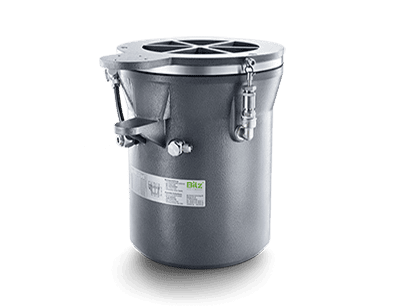
Made from cast aluminium, universally applicable.
- max. working height 157mm
- Load-independent natural frequency
- Wear-resistant, lowmaintenance air damping, easy to adjust from the outside.
- No transmission of structureborne noise.
- Powder coated in RAL similar to 7037, dusty grey.
Series BIAIR-ED-HE (made from Cast Aluminium)
Key Features
Very low-frequency (vertical 1.7 Hz) membrane air spring with precisely adjustable damping for effective vibration isolation.
Made from cast aluminium, universally applicable.
- max. working height 307mm
- Load-independent natural frequency
- Wear-resistant, low maintenance air damping, easy to adjust from the outside
- No transmission of structure-borne noise
- Powder coated in RAL similar to 7037, dusty grey
Series BIAIR-ED-HE-MAX (made from Cast Aluminium)
Key Features
Very low-frequency (vertical 1.2 Hz) membrane air spring with precisely adjustable damping for effective vibration isolation.
Made from cast aluminium, universally applicable.
- max. working height 509 mm
- Load-independent natural frequency
- Wear-resistant, low maintenance air damping, easy to adjust from the outside
- No transmission of structureborne noise
- Powder coated in RAL similar to 7037, dusty grey
Applications for Membrane Air Spring
These systems provide highly effective receiver isolation for measuring, testing, inspection, and production machines in the semiconductor industry.
Additionally, they suit optical and electronic devices, laser systems, and precision machining equipment.
They also provide effective isolation for vehicle, engine, and gearbox test benches.